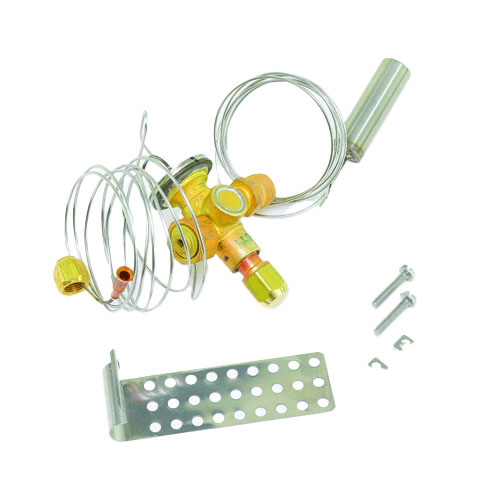
Description
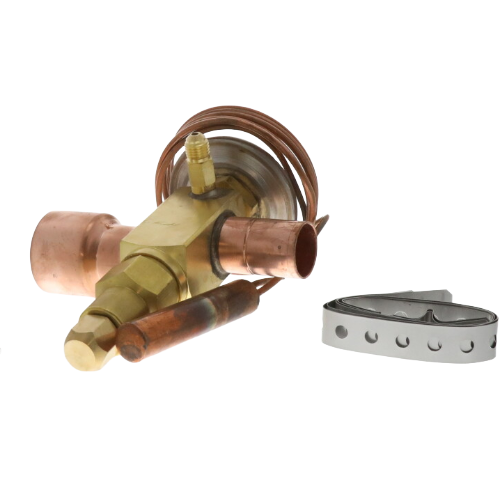
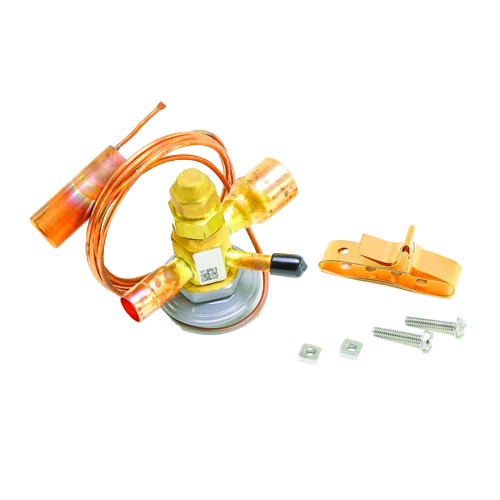
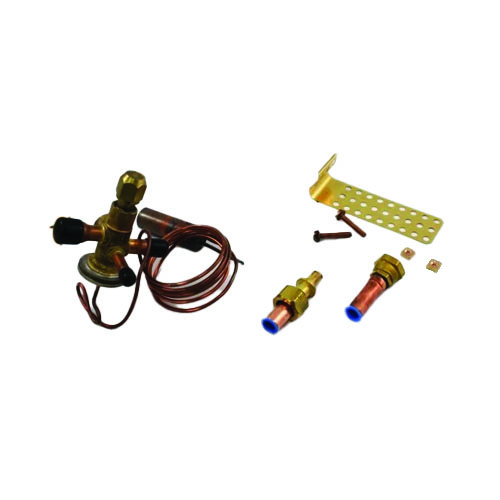
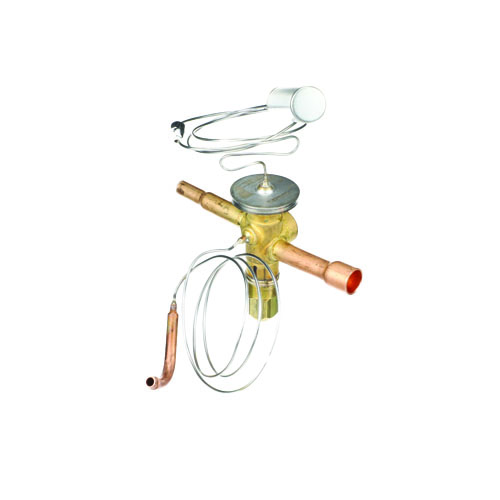
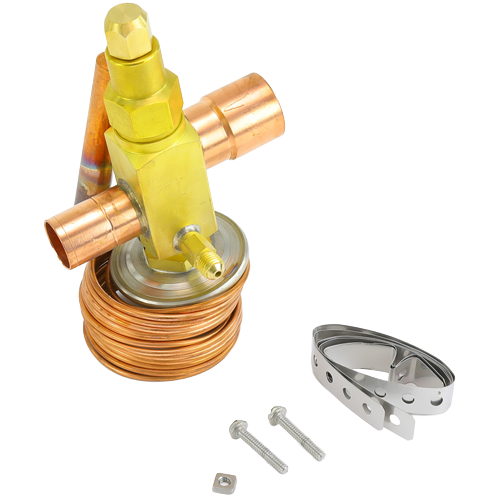
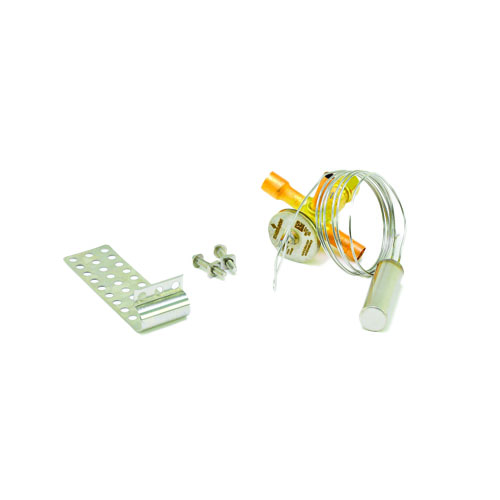
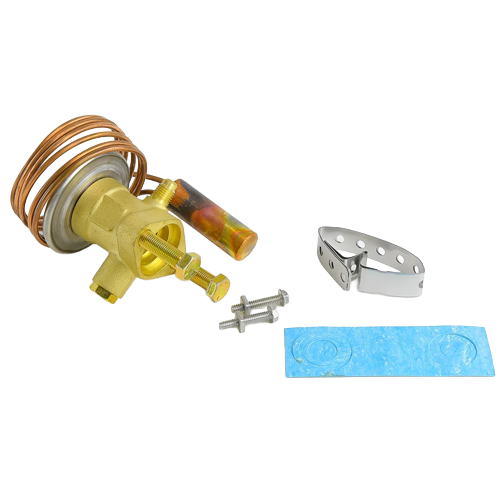
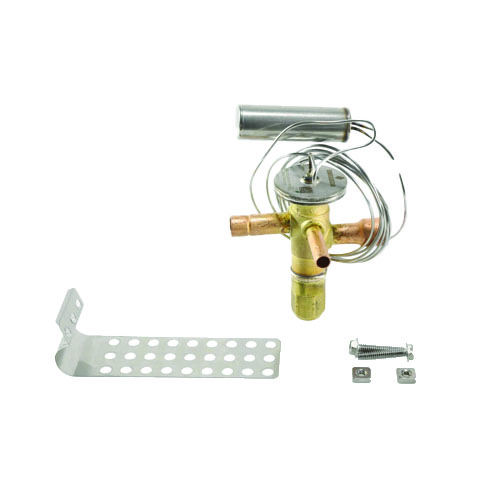
The Copeland 091044 is a high-performance NXT Series Thermal Expansion Valve (TXV) engineered for reliable refrigerant metering in R410A systems up to 7 tons of capacity. Featuring a straight-through body design with a 5-foot capillary tube and Chatleff x Chatleff connections, this valve delivers precise superheat control and long-lasting field performance in demanding HVAC applications.
The adjustable superheat setting allows technicians to fine-tune system performance on-site, while the integrated check valve simplifies installation in heat pump and cooling-only systems alike. The external equalizer port with a 1/4″ SAE flare nut ensures accurate pressure sensing downstream of the valve, optimizing evaporator performance across a wide range of operating conditions.
Key Features
- NXT Series Thermal Expansion Valve (TXV) by Copeland
- Refrigerant: R410A
- Capacity: 7 Ton
- Connections: Chatleff x Chatleff
- Capillary tube length: 5 feet
- Body style: Straight-through
- Adjustable superheat for field optimization
- Integrated check valve for versatile system compatibility
- External equalizer with 1/4″ SAE flare nut connection
- Part Number / Model: NAE 7 ZAA 5FT CHA S/T
- SKU: 091044
Applications
- R410A residential and light commercial air conditioning systems
- Heat pump systems requiring integrated check valve functionality
- Split systems and package units up to 7 tons
- Replacement or new installation in systems requiring external equalizer TXVs
Why Choose the Copeland NXT Series TXV?
The NXT Series is designed for ease of installation and reliable long-term operation. The straight-through body orientation simplifies line routing, while the 5-foot capillary tube provides installation flexibility in a variety of equipment configurations. Adjustable superheat puts control in the technician’s hands, ensuring optimal system efficiency from the first startup.